
Surprising fact: using a privacy-focused wallet does not automatically make every transaction private — the choices you make about networks, node connections, and device security often matter more than the coin you hold. For US-based users deciding between Monero, Haven Protocol, and multi-currency privacy wallets, the practical question is less “which coin is private?” and more “which combination of protocol features and operational practices reduces real-world linkability and custody risk?”
This article walks through mechanisms and trade-offs: how Monero’s on-chain privacy works compared with Haven’s wrapped-asset approach, how a multi-currency privacy wallet operationalizes network and device protections, and where the seams are — the places attackers, regulators, or accidental leaks commonly exploit. The goal is a sharp mental model you can reuse when evaluating wallets such as the one discussed here and when setting up a privacy-minded workflow.
Mechanisms: how Monero and Haven approach privacy differently
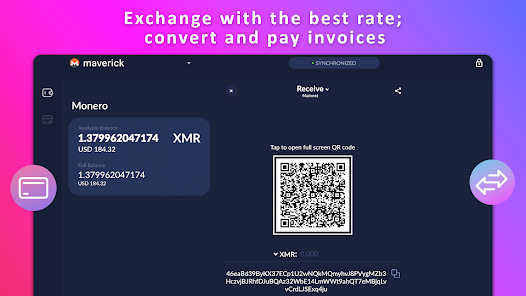
Monero (XMR) is a privacy-native currency: its privacy is built into the protocol using ring signatures, confidential transactions, and stealth addresses. Mechanistically, each outgoing transaction mixes inputs with decoy inputs (ring signatures), hides amounts (RingCT), and uses unique one-time addresses (stealth addresses and subaddresses) so recipients cannot be trivially linked to a public address. That’s why wallets that support Monero emphasize keeping the private view key on-device — it prevents remote servers from reconstructing your incoming transactions.
Haven Protocol (XHV) takes a different route: it provides asset-wrapping between XHV and collateralized or synthetic assets (for example, soft-pegged USD-like units). That means privacy is still an important design consideration, but the privacy surface changes when you create wrapped assets or move value across different representations. The operational detail to watch: wrapped assets can introduce new linkability unless the wallet and routing infrastructure obscure the conversion steps.
Key implication: Monero’s privacy is protocol-level and generally resistant to linkability from on-chain analysis — but it is not immune to network-layer leaks, endpoint compromises, or user mistakes. Haven adds flexibility for multi-asset privacy use cases but layers on conversion mechanics that can increase exposure if not handled carefully.
What a privacy-first, multi-currency wallet needs to do
A wallet that genuinely helps privacy-focused users must do three things well: secure keys locally, remove network-level identifiers, and minimize centralized metadata leaks during swaps and synchronization. Feature-wise, a strong candidate will be non-custodial and open-source, integrate hardware-wallet support, let you control peer/node selection, and offer routing for swaps that avoids centralized intermediaries.
For US users balancing convenience and risk, these features matter in practice. A wallet that encrypts keys with device hardware — Secure Enclave on iOS or TPM on Android — and allows PIN or biometric gating reduces local-exposure risk. Complement that with Tor-only mode, I2P proxy support, and the option to connect to custom nodes to limit IP-based correlation. The wallet described here implements those exact mechanisms: it keeps the Monero private view key on-device and supports Tor/I2P and custom nodes to harden network privacy.
One operational note that is often overlooked: a zero-telemetry policy is necessary but not sufficient. Even if developers collect no data, third-party swap services, node operators, or the network itself can observe metadata. Non-custodial design and open-source code reduce supply-chain risks, but users must still be deliberate about which peers they trust and how they perform cross-chain swaps.
Cross-chain swaps: decentralized routing and the NEAR Intents trade-off
Convenience now often means swapping inside a single app. To avoid centralized custodians, some wallets use decentralized routing systems — the wallet in focus uses a system called NEAR Intents. Mechanically, NEAR Intents automates routing to competitive market makers and stitches liquidity paths without sending funds through a central escrow. That reduces custody risk compared with traditional custodial exchanges.
However, decentralized routing introduces its own trade-offs. It relies on multiple market-makers and on-chain actors whose privacy practices vary. Each hop in a routing path can create correlation points; the wallet must minimize on-chain traces between hops to keep privacy intact. In short: NEAR-style routing is valuable for reducing central custody, but it does not replace careful node selection, local key security, or conservative operational hygiene.
Real attack surfaces and boundary conditions
Understanding where privacy breaks down is essential. Here are the common failure modes and what mitigations the wallet provides or leaves to the user:
– Network-layer deanonymization: If you connect directly to public nodes over your home IP, observers can link your transactions to your address. The mitigation: Tor-only mode, I2P support, and custom node options reduce this risk by decoupling IPs from transaction announcements.
– Device compromise: Malware or physical access can leak keys or view keys. Device-level encryption (Secure Enclave / TPM) and hardware wallet integration (Ledger, air-gapped Cupcake) materially raise the bar for attackers.
– Metadata during swaps: Cross-chain swaps can leak timing and amount correlations. Decentralized routing reduces some central points but adds multiple actors. Prefer swap paths that minimize known on-chain linkages, and consider splitting large swaps into smaller parts if you require stronger unlinkability.
– Protocol-specific migration problems: Not all seeds or compatibility assumptions are universal. A practical example: moving Zcash from certain wallets (Zashi) into this wallet is non-trivial — seed phrase incompatibilities require manual transfers rather than automatic migration. That’s a reminder: compatibility edges are real operational risks when consolidating assets.
Comparative decision framework: which setup fits which user?
Use this simple rubric to select an approach:
– Highest privacy, single-asset focus (expert users): Monero-only workflows with a dedicated XMR node and strict Tor-only connectivity. Keep private view key offline except on your secured device. Use hardware signing for each spend.
– Multi-currency privacy with practical convenience (privacy-conscious traders): A non-custodial, open-source multi-currency wallet that integrates Monero, Bitcoin privacy tools, LTC MWEB, and on-wallet swap mechanics. Use Tor/I2P, hardware wallet integration, and NEAR Intents for swaps to avoid custodians while accepting some routing complexity.
– Casual private use (occasional privacy needs): Lightweight wallet with enforced shielding for Zcash, basic privacy BTC features, and clear migration guidance. Understand limitations (e.g., Zashi incompatibility) before consolidating funds.
The wallet that combines these features and platform reach — iOS, macOS, Android (including F-Droid and direct APK), Linux, and Windows — can support all three profiles, but you must configure it appropriately. A default install is rarely privacy-optimal; the settings you pick establish your real privacy posture.
Practical setup checklist for US-based privacy users
Here is a decision-useful checklist to convert theory into safer practice:
1) Choose non-custodial, open-source software and verify signatures before install. 2) Enable Tor-only mode or at least I2P and configure a custom node for Monero syncing. 3) Use device-level encryption and enable biometric or strong PIN protection. 4) Integrate a hardware wallet (Ledger or air-gapped Cupcake) for significant balances. 5) Prefer PayJoin v2, Silent Payments, and UTXO coin control for BTC transactions. 6) For cross-chain swaps, prefer decentralized routing (NEAR Intents) but split and stagger large swaps to reduce correlation risk. 7) Keep the private view key on-device and avoid exporting it unless you understand the consequences.
If you want a single place to begin exploring these features in a practical interface, consider trying cake wallet and following the checklist above to harden your setup.
Limits, unknowns, and what to watch next
There are structural limits to any wallet’s privacy guarantees. Open-source and no-telemetry policies reduce developer-side risk, but supply-chain risks (malicious builds, compromised app stores), evolving deanonymization techniques, and regulatory pressure on node operators remain real threats. Two items to monitor:
– Research on network-level deanonymization: improvements in traffic analysis could change the efficacy of Tor/I2P defenses over time, so wallet developers must keep up with browser and network stack hardening.
– Liquidity-provider practices for decentralized routing: as NEAR Intents and similar systems scale, their market-maker set and privacy practices will determine whether routing remains low-risk or becomes a source of metadata leakage.
These are plausible scenarios, not predictions. If either trend shifts, operational best practices will need to adjust — for example, moving toward more local liquidity relays or increased use of offline signing for cross-chain operations.
FAQ
Does using a privacy wallet make Monero transactions impossible to trace?
No. Monero is designed to resist on-chain tracing, and a privacy wallet that keeps view keys on-device and uses Tor reduces many risks. But network-layer leaks, compromised devices, poorly chosen nodes, or careless operational habits can still expose you. Privacy is a chain of protections; a single broken link can weaken the whole system.
Are cross-chain swaps private when done inside a multi-currency wallet?
They can be more private than using a centralized exchange because non-custodial routing avoids a single custody point. Systems like NEAR Intents find decentralized routes among market makers, lowering custody risk. However, each hop can create metadata. To preserve privacy, control node connections, use Tor/I2P, and break large swaps into smaller, time-separated transactions if unlinkability is crucial.
What operational steps protect against device compromise?
Use hardware-backed key storage (Secure Enclave / TPM), enable a strong local PIN or biometrics, pair with a hardware wallet for significant funds, and keep backups of seed phrases in secure, offline locations. Remember that if malware can read your screen or keystrokes, even strong device encryption won’t fully protect you; air-gapped signing reduces that exposure.
Is mandatory shielding for Zcash a privacy benefit or a restriction?
Mandatory shielding reduces the risk of accidentally sending funds from transparent addresses, which is a privacy benefit because it prevents transparent-address leaks. The trade-off is that it can complicate migration from incompatible wallets (for example, Zashi), requiring manual transfers rather than seed-based migration. That operational friction is the cost of a safer default.
How should US users weigh legal or regulatory risks?
This article doesn’t provide legal advice. Generally, privacy tools are lawful in many jurisdictions, but regulatory attention to privacy-preserving financial tools can change. Keep abreast of local guidance, do not use privacy tools to evade lawful obligations, and consider professional legal counsel for large or enterprise-scale activities.